Showing posts with label Japanese. Show all posts

Thursday, 16 April 2015

Ikkoryu Fukuoka Ramen

27 Russell St 
Melbourne, VIC 
http://www.ikkoryu.com.au/

It has begun. The Ramen Revolution. 2014 blessed Melbourne with two of the best ramen restaurants we have to date – Fukuryu Ramen and Hakata Gensuke. In fact, my hopes have been raised high enough that the thought of a visit to the newest ramen restaurant in Melbourne – Ikkoryu Fukuoka Ramen – no longer makes me retreat into my shell for fear of being disappointed. 


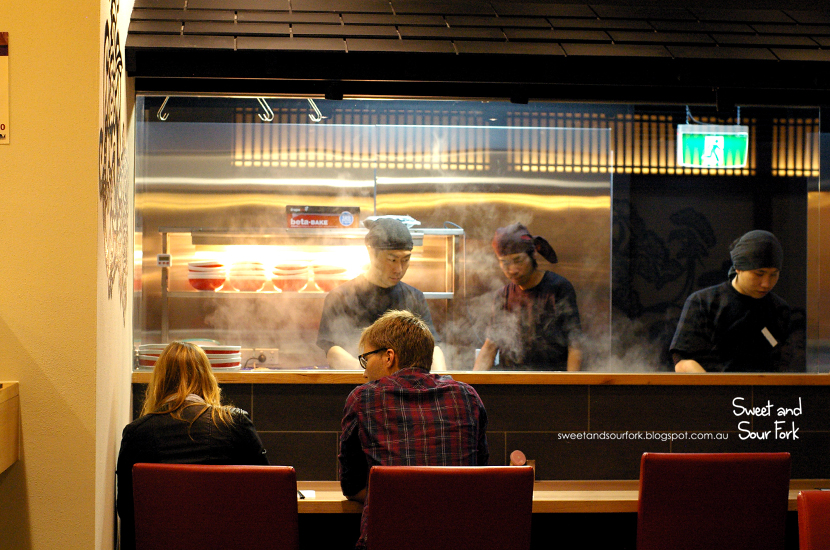
Though a bit hard to find, the result is well worth it. The set-up reminded me a lot of Japan, albeit being a lot less grungy and rough around the edges. The window behind which the chefs work in clouds of steam is the main attraction, but the sake bar and private function room is pretty sweet too.


Yakimeshi (normally $12)

Whilst waiting for our ramen, we whetted our appetites with a couple of the samples coming out of the kitchen. The first was a pinch of Yakimeshi (normally $12) – Japanese fried rice. The fluffy grains were tossed about in a hot wok with a fragrant mixture of egg and pork, bound together with a savoury smokiness. 


Gyoza ($11, 5pcs)

Equally as lovely were the Gyoza ($11, 5pcs), its slippery smooth skin burnished to a crisp at the bottom, and holding within it a juicy nugget of pork mince. 


Sake Punch

From the bar was a Sake Punch – a refreshing combination of sake and apple juice. 


Ikkoryu Original Tonkotsu ($15) 

There were 5 types of ramen on the menu, and customisation ranged from toppings, to noodle texture, to the amount of oil on your ramen. Going back to basics, I ordered the Ikkoryu Original Tonkotsu ($15) with a ‘normal’ level on all the customisable options. This bowl of noodles took me back to Japan, with its creamy soup and globules of fat glistening on the surface. The toppings were also top-notch; the gooey egg was savoury from being marinated in a soy mixture, and though thin, the charshu slices had an optimum fat-to-meat ratio that melted in the mouth. 


Miso Tonkotsu ($17)

The Miso Tonkotsu ($17) was exactly what it sounded like. The addition of miso paste meant that the soup was earthier, and had a thicker mouth-feel that nevertheless still allowed the porkiness to come through. 


Miso Tonkotsu ($17)

The noodles themselves were absolutely fantastic. Medium thickness and just a little bit curly, these were toothsome with a lingering hint of bicarbonate – a necessity in any good noodle if you ask me.

So what did I think? Despite the good food, this was a hard question to answer. I thought the noodles were noticeably better than Fukuryu Ramen, but not as tasty as the JUST-LIKE-JAPAN ramen of Hakata Gensuke. Although this puts Ikkoryu well within the top 3 ramens you can get in Melbourne, I just couldn’t get over the pricing. I was nowhere near full after my $17 bowl of noodles, and although the toppings were first-rate, they were rather miserly in terms of portion size. Even more insulting was the price of the gyoza - $11 for 5 pieces! I don’t like to bring price into my reviews (unless it’s a bargain of course!), as I believe that everyone has different standards as to how much a meal is worth, but the prices at Ikkoryu are borderline daylight robbery. Combined with the fact that I can get better noodles for less at Hakata Gensuke, or a cheaper, larger, and still pretty great bowl of noodles at Fukuryu, I don’t think I’ll be back any time soon.

Rating: 13/20 – what a shame.
This rating reflects my personal experience at the time of visit.
Sweet and Sour Fork dined as a guest of Ikkoryu Fukuoka Ramen. 

Ikkoryu Fukuoka Ramen on Urbanspoon

Thursday, 5 February 2015

Maedaya

398-400 Bridge Rd 
Richmond, VIC 


Maedaya Tsukune Set ($11)


Inari Kushi ($2.8)


Takoyaki ($5.5, 6pcs)


Yaki Buta ($8.5)


Salt and Pepper Squid Salad ($8.5, regular)


Agedashi Tofu ($6)


Yakibuta Rice ($5)


Ika Sansai ($3)


Monday, 19 January 2015

Peko Peko

199 Smith St 
Collingwood, VIC


I went to Peko Peko for dinner the other day. No, not this Peko Peko, this Peko Peko. If you ask someone from Japan, ‘peko peko’ is the sound your stomach makes if you’re hungry. Given that, it’s no surprise that both restaurants have a Japanese influence to some degree, despite being completely unrelated.


But whereas Peko Peko in South Melbourne is mostly Taiwanese with a bit of Japan thrown in for fun, this Peko Peko in Collingwood is full-blown Japanese. The interior was endearingly oriental, including the unique little upstairs section that opens out to the main restaurant, but it just can’t shake the hint of grunge so characteristic of the Melbourne inner-north. It was a good bit of fun, watching the Japanese chefs rub shoulders with backpacking waitresses. 


Hiyayakko ($6)

Heaps of people I know complain about tofu because it’s bland without any seasoning, which I think is entirely unfair. I mean really, you can say that same about rice or pasta – it’s MEANT to be had with seasoning. Anyway, aside from being a fan of tofu with century egg, Hiyayakko ($6) is another favourite way of mine to have tofu. The flavour palette of this cold dish was spot on, the soy sauce and bonito flakes a lovely combination of umami, whilst the surprise addition of grated pickled ginger added a zesty heat. Unfortunately it was let down by the tofu, which instead of being fresh and silky, has started down the road to being clumpy and spongy. 


Makizushi ($10, 8pcs)

I was pleasantly surprised to find that the Makizushi ($10, 8pcs) was a generous serve of salmon and tuna hand rolls. Though nothing special, it was nice to be given a chance to down a large serve of sushi, with plenty of pickled ginger between bites to clear the palette. 


Currydon ($16)

The Currydon ($16) was listed under the ‘big food’ section, but I wasn’t prepared for just how substantial a bowl filled to the brim with curry and rice was. 


Currydon ($16)

When mixed through, the rice and sauce was rich and sticky, and the large pieces of chicken extremely tender. There was the addition of several unorthodox, but welcome vegetables such as capsicum and spinach. What I discovered very soon however, was that this was an extremely oily curry – within minutes, a small pool of oil had collected in the spoon that I had left in the rice. That certainly explained why this was even more filling than a standard curry.

I can’t quite put my finger on it, but Peko Peko felt different to all of the other Japanese restaurants I’ve been too. Either way, regardless of what that difference might be, a good solid meal can be found here; it may be a little more expensive than what you’re used to, but the portions are certainly generous, and the flavours are pretty close to the real thing. 


Oh, and look at this awesome piece of graffiti art I found down the road!

Rating: 13/20 – grumble grumble.
This rating reflects my personal experience at the time of visit.

Peko Peko on Urbanspoon

Monday, 15 December 2014

Mugen Ramen and Bar

11 Bligh Pl 
Melbourne, VIC 
http://www.mensousaimugen.com/


If I had to use one word to describe Melbourne, that word would be ‘cool’. Inside every crevice, tucked away in her hidden pockets, are new surprises waiting to be discovered.  And if Robot Bar, hidden away in a laneway off a laneway, isn’t cool enough for you, there’s always the option to step across the lane to Mugen Ramen and Bar, its sister restaurant.


A steep metal staircase wound down to a dark, tiny basement, its rough-hewn concrete walls simultaneously chic yet peaceful – very modern Japanese. The menu consists of a mixture of ramen, a small batch of lunch specials, and a longer list of Japanese fusion tapas, aka japas. 


Curry Tsukemen ($13, small)

Though tonkotsu is the flavour of the month and everybody’s favourite ramen, there’s something to be said about the novelty of Curry Tsukemen ($13, small). Instead of being in a soup, the noodles were served cold on the side with a slice of seaweed and a slice of charshu pork. I couldn’t resist adding a Soft Boiled Egg ($2).


Curry Tsukemen ($13, small)

I have to say, the texture of these ramen noodles were the best I’ve had to date. The thick curry sauce clung to the chewy strands, and each mouthful was simply made for slurping. 


Wafu Ramen ($13, small)

The Wafu Ramen ($13, small), however traditional, was nothing to be scoffed at. Though touted as a simple soy and dashi broth, the flavour profile was surprisingly complex. 


Wafu Ramen ($13, small)

Having been braised for a full 48 hours, the delicate umami of the bonito has long since enriched into something deep and fragrant. The slice of charshu was half-melted from slow cooking, its succulent texture soaking up the aroma of the broth.

Having been so fixated on the perfect tonkotsu, I failed to notice the other types of ramen around Melbourne quietly raising their exquisite heads. I was enormously impressed with the texture of the noodles at Mugen, and almost just as impressed with how elegantly executed the classic Japanese flavours were. It’s definitely one worth keeping an eye on.

Rating: 14.5/20 – such chewy.
This rating reflects my personal experience at the time of visit. 

Mugen Ramen & Bar on Urbanspoon

Monday, 17 November 2014

Umaido

1 Main St 
Box Hill, VIC 3128

It just hit me that in the two and a bit weeks I spent in Japan last year, I didn’t have a single bowl of udon. At the time, I was too busy chasing up the perfect ramen that was, until recently, so elusive in Melbourne. In hindsight it probably would’ve been nice to have a bona fide Japanese udon, but I’m not too upset – I think we have it pretty good here in Melbourne. 


Japanese food doesn’t have much of an audience in the outer eastern suburbs, where the Asian population largely stems from China and south-east Asia. But that doesn’t stop the occasional Japanese restaurant, such as Umaido, from cropping up. And I for one rather like the blatant Japanese-ness of it. 


One thing I got very used to seeing in Japan was wide selections of fried snacks lounging under heat lamps – they were everywhere, in restaurants, supermarkets, even convenience stores. And Umaido, aside from specialising in udon (and a small smattering of rice-based dishes), also has one of those nostalgically familiar pick-your-own-sides stations. 


Ontama Udon ($5.9)

The Ontama Udon ($5.9) is exactly what I think of when I think of udon. Though the noodles were a bit overcooked, they were fat and slurpable. The soup is fantastic, a light umami with the faint fishiness of bonito, turning creamy with the stream of yolk from the soft boiled egg. 


Hungrier than I am, but less of a purist, Chris had the winter special of... I have embarrassingly forgotten to note the name down, but it was something along the lines of a Pork Belly in Pork Broth Udon ($9.9). Unlike the delicate little bowl of Ontama Udon, this one was much more generous in portion, the delicate soup replaced with a cloudy, garlicky broth. The slices of pork, rather than being thick and fatty, were smoky and chewy, and enjoyable in its own right. 


Takoyaki ($2, 2pcs)/Vegetable Korokke ($1.8)/Karaage Chicken ($2.9, 3pcs)

We chose three sides to go with our meal. The Takoyaki ($2, 2pcs) was a disappointment, gluggier than it should’ve been even after sitting out under the heat lamps. The Vegetable Korokke ($1.8) fared better, the patty of smooth mashed potato coated in a golden crumb. The Karaage Chicken ($2.9, 3pcs) was the best, the juicy ribs flavoured with a spice rub and tasted fantastic despite being lukewarm.

Though Umaido is not fine dining, and the udon certainly isn’t as good as this or as this, it provides a good imitation of the true udon experience for a fraction of the price. If I can peel myself away from the Ontama Udon, I might give the soft boiled egg curry rice a go.

Rating: 13/20 – slippy slurpy.
This rating reflects my personal experience at the time of visit. 

Umaido on Urbanspoon

Thursday, 6 November 2014

Shira Nui

247 Springvale Rd
Glen Waverley, VIC 3150


I count myself exceptionally lucky to have a Japanese restaurant as stellar as Shira Nui in my neighbourhood. Instead of being grandiose or tacky, Shira Nui has opted for a clean and restrained approach – in true Japanese style. And though I count the omakase option to be the one of the best meals I’ve ever had, I’ve decided to give the a la carte menu a go instead, partially because Chris isn’t the hugest fan of sushi, and partially because I’m convinced that it’ll be just as breathtaking of a meal. 


Whilst we perused the short and traditional menu, we were served the familiar appetiser of pickled onions and fried fish, the sweet and tangy flavours waking up the palate. 


Shira Nui Nigiri ($45)

Just because we weren’t doing the omakase, it didn’t mean that I’m passing up the opportunity to have sushi at Shira Nui. The Shira Nui Nigiri ($45) consisted over 9 perfect specimens of seafood, draped lavishly over little balls of rice.

The Ark Shell is one I remember very well from the omakase, not for its taste, but for the slick, crunchy texture carrying just a whiff of the ocean.

I’m not usually a fan of Tuna, but when the thick, ruby coloured piece of fish is so beautifully tender, melting gently on the tongue, it’s hard to resist.


I had expected Shira Nui’s Salmon nigiri to be the best I’ve ever had, and it breezed past my expectations effortlessly. Taken from the belly and streaked with fat, it hits the tongue with a wave of buttery richness that trumps anything I’ve had, salmon or otherwise. 


Shira Nui Nigiri ($45)

After the decadence of the salmon nigiri, the Kingfish, light and firm, was a refreshing change.


The Mackerel was one I haven’t had before. On the fishiness scale (see what I did there) of sushi fish, mackerel is very much up there. I wouldn’t go out of my way to have it again as I found the fishiness was quite overwhelming, but I appreciated the thin slice of sweet seaweed holding the sprinkle of spice mix to the fish, and I won’t deny that the flavour combination is superb. 


Shira Nui Nigiri ($45)

The Seared Ocean Trout was another selection from the omakase that I’ve been dreaming about. Quickly seared so that whilst the top side acquired a layer of smokiness to accompany the miso dressing, the underside remained plump and sweet.

The Eel nigiri was another miracle of blowtorching. The slab of eel, already fat and smoky, was heated just enough for the glaze to caramelise into a charred, toffee-like sweetness.


The final two pieces of sushi provided the perfect opportunity to study the difference between Flying Fish Roe and Salmon Roe. Whereas the tiny flying fish roe crunched its way into a mouthful of brininess, the salmon roe popped generously under slight pressure  for a milder, sweeter experience 


Nasi Dengaku ($15)

I was curious to see what Shira Nui could do with a dish as a humble as Nasi Dengaku ($15), and they didn’t disappoint. For starters, the eggplant was outstanding; it was cooked to a pulpy tenderness perfect for soaking up miso paste, but the exterior retained enough form to carry a hint of caramelisation from the pan. We were instructed to try the dark miso first, and the taste of it was strong and earthy, even slightly fermented. The light miso on the other hand retained the earthiness, but swapped the deeper tones for a sweet nuttiness. Never have I been so impressed with such a simple dish.  


Yose Nabe ($30)

In true Japanese style, we finished with a more filling dish of Yose Nabe ($30), a hot pot of seafood, chicken, beef, and vegetables cooked with udon in a light broth. 


Yose Nabe ($30)

If I were rich, this is what I would eat whenever I was under the weather. The seafood had been cooked until its flavours seeped into the stock, forming a deep, delicate umami that reflected back into the rare slices of marbled beef. The thick strands of udon were slippery and chewy, and tasted of ripened wheat.

What I like so much about Shira Nui comes down to just how good the produce is, and how much respect the chefs have for it. They only take the best of the best, and nothing is over-dressed and over-seasoned; instead, a backdrop is provided that allows the produce to shine. And for that reason, I think that the omakase is still the best way to experience what Shira Nui has to offer, though for the people who don’t eat sushi, the a la carte is still likely some of the best traditional Japanese food you’ll ever have.

Rating: 16/20 – best of the best.
This rating reflects my personal experience at the time of visit.